
The view no one inside your company has.
Leadership and management development for the full leadership team, private, weekly, simultaneous across every level of the organization. For growing companies whose people need to lead at the pace of the business.
Leadership Challenges
-
Self-Management
-
Interpersonal Skills
-
Leadership & Influence
-
Challenges
-
Pitfalls
Explore 30+ leadership skill breakdowns →
How It Works
One engagement. Every leader. All at once.
Most leadership development works on one person at the top, or puts a group through the same program. Neither approach gives you a real picture of what's happening across the organization.
Full-Team Development
Each leader gets a private, structured weekly session, from the CEO down through VPs, directors, managers, and team leads, running in parallel, not sequentially.
Learn moreThe View No Insider Has
Working privately across the whole organization surfaces what directors won't say to the CEO and what team leads won't say to their managers. That picture gets synthesized and brought back to the CEO.
Learn moreChange That Sticks
Through pulse tracking, people reviews, and deliberate habit installation, leaders build the practices that make good management durable, not just understood in theory.
Learn moreRecent Blog Posts
Ideas and observations from the front lines of leadership.

Your Values Statement Is Either a Decision Rule or Wall Art
In 1982, James Burke pulled 31 million bottles of Tylenol against FBI advice, in a $100 million decision that took almost no time at all. He always insisted the decision wasn't made during the crisis, it was made seven years earlier, in a room with no crisis in sight. The difference between a value that saves you and one that fails you is whether it was ever tested when testing was cheap.
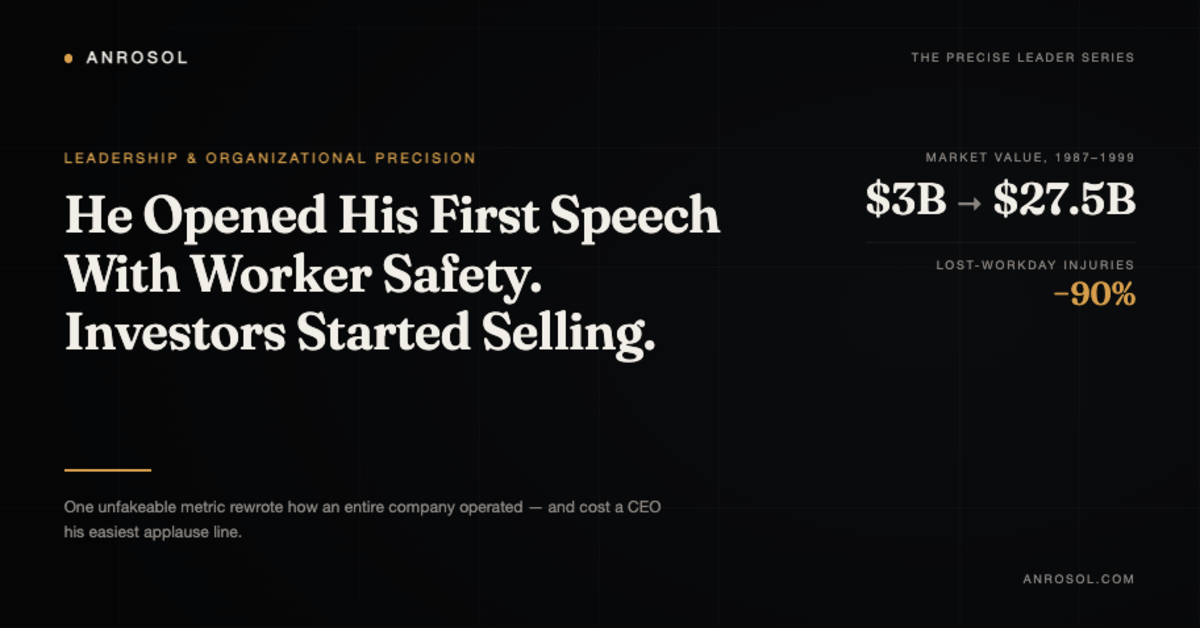
He Opened His First Speech With Worker Safety. Investors Started Selling.
Investors sold Alcoa the day Paul O'Neill said he'd be judged on worker safety instead of margins. Twelve years later the company was worth nine times more. The difference wasn't the metric, it was that nobody could fake it.
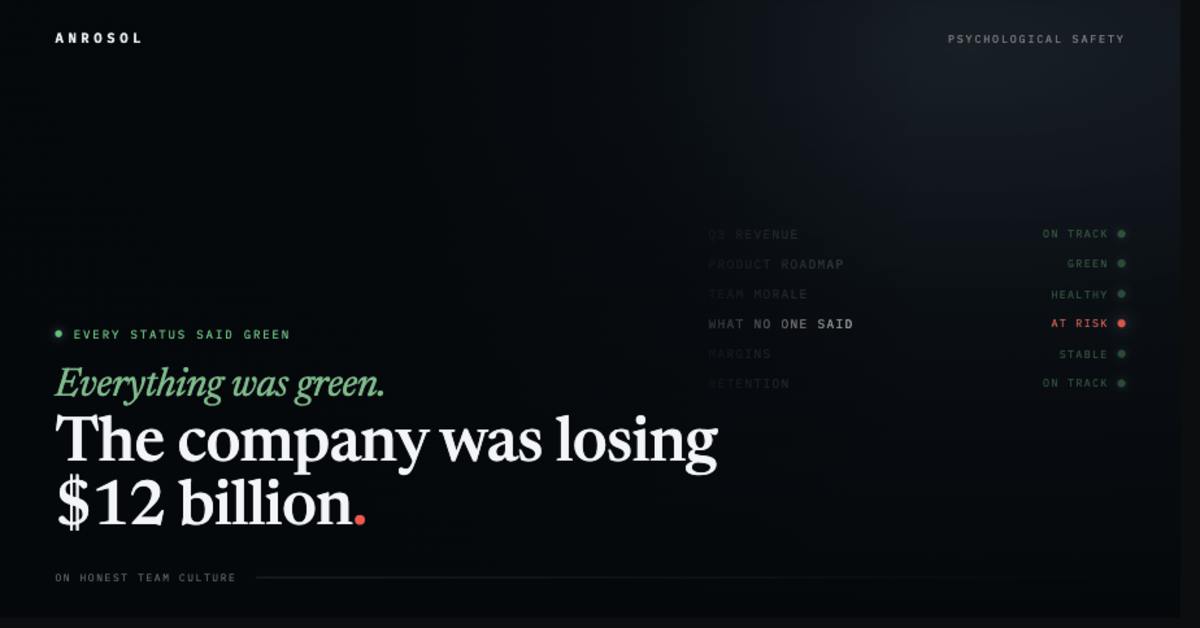
Everything Was Green. The Company Was Losing $12 Billion.
When Alan Mulally took over Ford, every executive reported good news. The company was losing $12.7 billion. What he did in the next meeting, and how he responded to the first person who told the truth, is one of the clearest examples of how honest team culture is actually built.
Newsletter
Access guidance that leverages tested wisdom for free. Get leadership tips straight to your inbox.
What Makes This Different
The combination of simultaneous cross-organizational access and structured one-on-one development is rare. It means the work is grounded in what's actually happening, not the official version.
Simultaneous Access
Every Leader at Once
Every leader in the organization participates, simultaneously, not sequentially. That's what creates the cross-organizational picture nobody inside the company can assemble on their own.
Cross-Organizational View
The Gap Between Story and Reality
This process hears what directors won't say to the CEO, what team leads won't say to their directors. Most companies are flying blind on that gap. It's usually where the real problems live.
Structured Sessions
Private, Consistent, and Grounded
Sessions follow a consistent framework: quantified pulse tracking, structured people reviews, and deliberate habit installation. Not therapy. Not casual check-ins. Development work.
Sustained Commitment
Behavior Changes Through Repetition
Leadership behavior doesn't change from a workshop. It changes through consistent, private, individualized work over months, until the new behavior becomes the default.
Pulse Tracking
Every session opens with a quantified self-assessment across five dimensions, creating a running record of each leader's state over time, surfacing trends before they become problems.
Productivity
output and focus
Engagement
energy and investment
Empowerment
autonomy and ownership
Collaboration
relationships and teamwork
Conflict Resolution
tension and repair