Everything Was Green. The Company Was Losing $12 Billion.
The Precise Leader Series: Leadership & Psychological Safety
When Alan Mulally arrived at Ford in 2006, the company was on track to post the largest loss in its history, $12.7 billion.
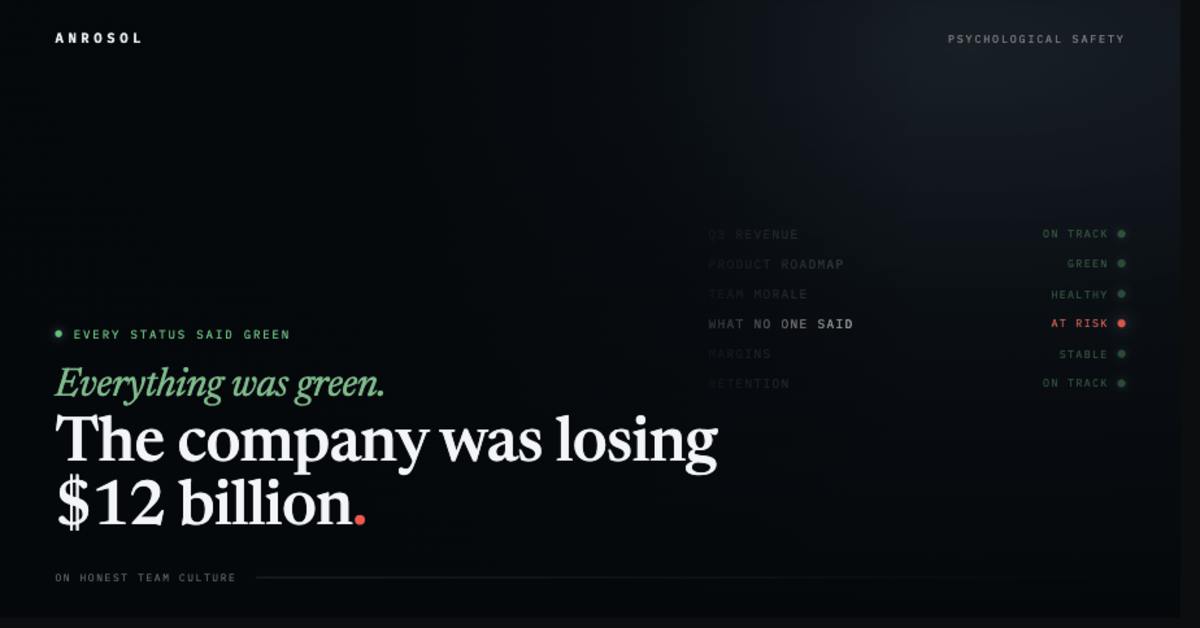
He walked into his first executive review meeting and asked his leaders to report their status using a simple colour system: green for on track, yellow at risk, red in trouble.
Every single status was green.
That's not a data problem.
That's a culture problem.
Why Leaders Stop Hearing the Truth
When people consistently report good news in the face of bad reality, they're not being dishonest out of malice.
They're being rational.
At Ford, red had historically meant blame.
The leaders who surfaced problems were the first to be removed.
Silence was the rational response to a system that punished transparency.
So everyone waited to see what happened to whoever went first, and nobody went first.
This dynamic isn't unique to Ford.
In nearly every leadership team I work with, there is a version of this gap between what gets said in the room and what people actually know.
The data that leadership needs to make good decisions gets filtered, softened, or withheld somewhere between the ground floor and the boardroom.
The question isn't whether your people know what's really happening.
They do.
The question is whether they believe it's safe to tell you.
The Moment That Changed Ford
For weeks, every chart stayed green while the company bled billions.
Then a senior executive named Mark Fields did something no one else had: he marked a major product launch red.
A real problem, named out loud, in front of the entire leadership team.
The room went silent.
Everyone expected him to be punished.
Mulally started to clap.
"Great visibility, Mark. Who can help him?"
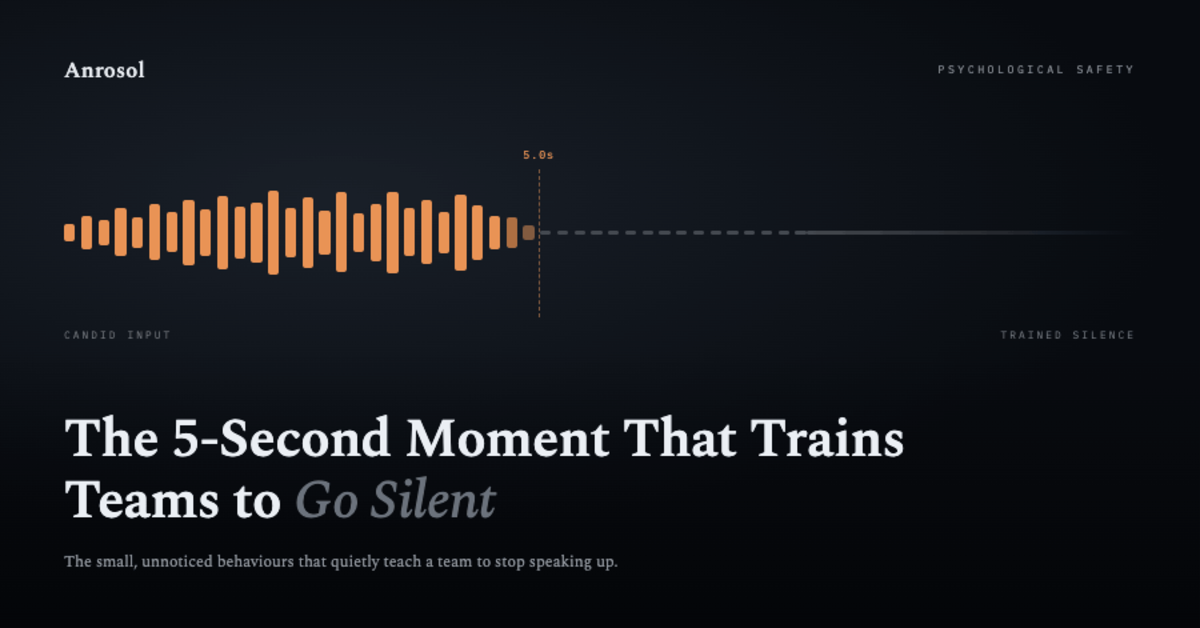
That five-second response, unhurried, genuine, without a trace of frustration, was the turning point.
Not a speech about trust.
Not a new policy.
A single, deliberate choice, made visibly, in front of everyone who needed to see it.
The following week, the charts were full of yellow and red.
That was the turnaround beginning.
What Mulally Actually Did
It's tempting to read this story as being about psychological safety, and it is.
But there's a more precise explanation for why Mulally's response worked.
He responded from calm and discipline, not from instinct or performance.
In my work with leadership teams, the leaders who consistently get the truth from their people are not necessarily the most charismatic or the most technically skilled.
They are the ones who have developed the discipline to manage their own reaction in the moments that matter most.
They don't visibly tighten when they hear bad news.
They don't reward the messenger who softens the message.
They have trained themselves, deliberately, over time, to treat visibility as a gift, regardless of what it reveals.
Mulally's clap wasn't spontaneous.
It was the expression of a clearly held belief, executed under pressure, in public.
That's discipline.
And that discipline is what made it credible.
A leader who sometimes rewards honesty and sometimes punishes it produces a team that gambles on which version shows up today.
Consistency is what builds the culture.
And consistency requires discipline more than it requires personality.
The Shift: Precision Over Performance
What Mulally built at Ford is a useful model, but the deeper principle is transferable to any leadership team at any scale.
The leaders who build honest team cultures make a specific trade: they give up the comfort of good-looking status reports in exchange for accurate ones.
They learn to treat a red status as visibility, not failure.
They reward the person who surfaces the problem, not the one who conceals it.
This is what we mean at Anrosol by precision over performance, the deliberate choice to optimize for what's true over what looks good.
It requires leaders who have done enough self-work to respond to difficult information without making the messenger pay for it.
Ford was the only major American automaker to avoid bankruptcy in the 2008 financial crisis.
It didn't start with a restructuring strategy or a new product line.
It started the moment a leader applauded bad news, and meant it.
What This Means for Your Team
If every status in your organization is green, that should concern you, not reassure you.
It means one of two things: either everything genuinely is on track, or your people have learned that green is the only acceptable answer.
The second scenario is far more common, and far more dangerous, because it compounds quietly until it can't be hidden anymore.
Building an honest team culture doesn't begin with a new reporting system or a team offsite on transparency.
It begins with how you respond the next time someone brings you a problem you didn't want to hear.
That response, measured, calm, and genuinely appreciative, is a leadership skill.
It can be developed.
And it's one of the most consequential things a leader can work on.